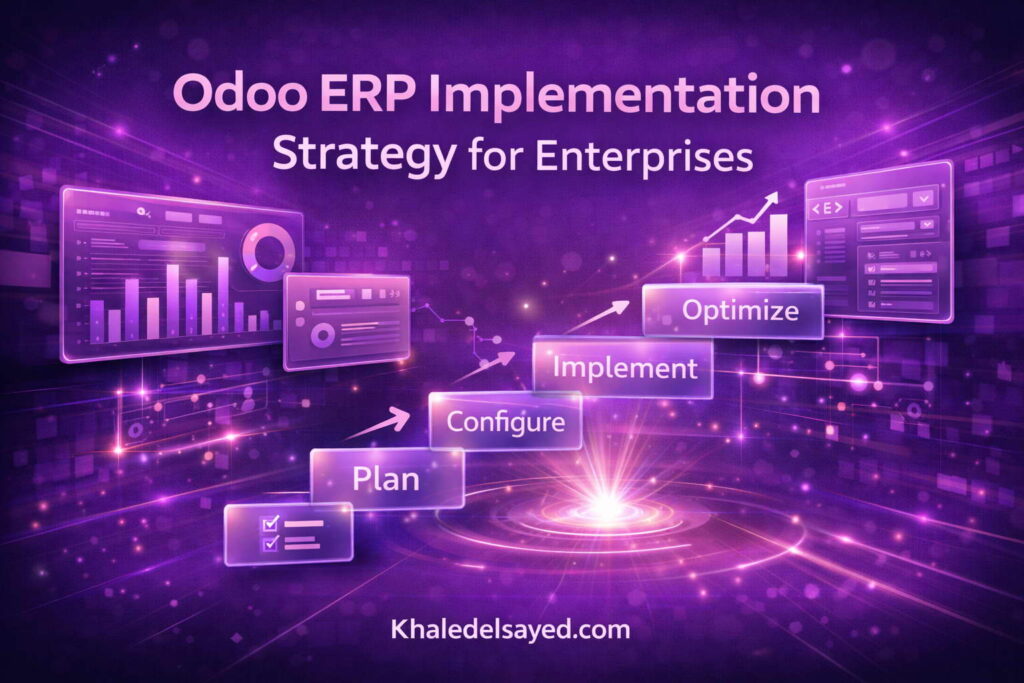
Odoo ERP Implementation Strategy for Enterprises
Enterprise-level digital transformation is not about installing software; it is about orchestrating change across people, processes, and technology. I have witnessed too many large organizations fail at odoo erp implementation not because the system lacked capability, but because they lacked a coherent strategy. As Khaled Elsayed Sqawa, a Digital Transformation leader, I have developed a battle-tested methodology for erp deployment that minimizes disruption while maximizing return on investment. This guide provides a step by step odoo erp implementation framework tailored specifically for enterprises, with a sharp focus on lead generation and operational excellence.
Unlike small businesses, enterprises face unique challenges: multiple legacy systems, thousands of users, complex approval hierarchies, and stringent compliance requirements. A successful odoo setup must address these realities head-on. This article distills insights from over a dozen enterprise Odoo deployments, revealing the hidden pitfalls and proven accelerators that separate successful transformations from costly failures. Let us begin with the strategic foundation.
1. Pre-Implementation: Enterprise Readiness Assessment
Before any odoo erp implementation begins, a rigorous readiness assessment is non-negotiable. Enterprises often skip this phase, driven by executive impatience or vendor pressure, only to encounter catastrophic delays later. The readiness assessment answers three critical questions: Is your data clean? Are your processes documented? Is your team prepared for change? Without affirmative answers, no step by step odoo erp implementation can succeed.
Data Auditing and Cleansing Protocols
Enterprise data is typically distributed across CRM, accounting, inventory, and legacy ERP systems. Duplicate customer records, inconsistent product codes, and incomplete supplier information are the norm. I require every enterprise client to complete a 4-week data audit before any odoo setup begins. The audit identifies: Duplicate entities: Merge or archive redundant customer, vendor, and product records. Orphaned transactions: Resolve invoices or purchase orders linked to deleted or inactive entities. Format inconsistencies: Standardize phone numbers, addresses, and tax IDs across all sources. One manufacturing enterprise I advised had 23% duplicate customer records. After cleansing, their erp deployment went live without a single data-related failure—a rarity in enterprise projects.
Process Mining and Gap Analysis
Documenting existing workflows is insufficient; you must measure them. Use process mining tools to extract actual cycle times, approval bottlenecks, and exception rates from your current systems. Then map these processes against Odoo’s native capabilities. The gap analysis reveals where odoo erp implementation requires customization versus where you can adopt Odoo’s best practices. A common mistake is customizing Odoo to replicate a broken legacy process. Instead, redesign the process first, then configure Odoo to support the improved workflow.
- Stakeholder Mapping: Identify executive sponsors, process owners, and end-user champions.
- Infrastructure Review: Assess server capacity, network latency, and mobile device readiness.
- Compliance Inventory: List all regulatory requirements (GDPR, SOX, industry-specific) that impact erp deployment.
2. Implementation Methodology: Phased vs. Big Bang Approaches
Enterprises face a critical strategic choice: phased or big bang odoo erp implementation. The big bang approach switches all modules and users simultaneously on a single cutover weekend. The phased approach rolls out modules or business units sequentially over months. Having led both types, I strongly advocate for phased deployment in all but the smallest enterprises. The risk of a big bang failure—halted operations, corrupted data, user rebellion—is simply too high for organizations with complex dependencies.
Module Sequencing Strategy
When executing a phased step by step odoo erp implementation, module sequencing is the most consequential decision. Start with modules that have minimal cross-departmental dependencies but deliver quick wins. My proven sequence for enterprises is: Phase 1 (Months 1-2): Accounting and Purchasing. These modules affect the fewest external users and provide immediate financial visibility. Phase 2 (Months 3-4): Sales and CRM. Now that financials are stable, integrate customer-facing processes. Phase 3 (Months 5-7): Inventory and Manufacturing. These modules depend on accurate sales and purchasing data from previous phases. Phase 4 (Months 8-10): Projects, Helpdesk, and remaining specialized modules. This sequence ensures that each phase builds on a stable foundation, reducing rollback risk.
Pilot Deployment and Parallel Run
Before enterprise-wide odoo setup, conduct a pilot with a single business unit or a subset of users. The pilot should run for 4-6 weeks while the legacy system remains active (parallel run). During this period, users enter transactions in both systems, and your team reconciles outputs daily. The parallel run reveals configuration errors, training gaps, and performance issues without business disruption. I consider a parallel run mandatory for any enterprise with over 100 users. The cost of the parallel run is insurance against a catastrophic go-live.
Cutover Planning and Rollback Procedures
Even with perfect planning, cutover weekend requires meticulous coordination. Create a cutover checklist with hourly tasks, responsible parties, and contingency triggers. Most critically, define explicit rollback criteria: “If inventory reconciliation shows >5% variance, revert to legacy system within 2 hours.” Document the rollback procedure step by step, including database restoration and user communication. Many enterprises skip this because it feels like planning for failure. In reality, having a rollback plan gives your team the confidence to execute decisively, paradoxically reducing the likelihood of needing it.
3. Change Management and User Adoption at Scale
Technology accounts for only 20% of odoo erp implementation success; the remaining 80% is change management. Enterprise users have entrenched habits, and any erp deployment that ignores human factors will fail regardless of technical excellence. I have developed an enterprise-scale change management framework that consistently achieves over 90% user adoption within 90 days of go-live.
Role-Based Training Academies
Generic training sessions waste time and confuse users. Instead, build a training academy with role-specific curricula. A procurement specialist needs deep knowledge of purchase orders, vendor management, and receiving workflows. A sales representative needs pipeline management, quotation generation, and mobile access. An accountant needs financial periods, reconciliation, and tax reporting. Each role should complete a certification process with hands-on assessments before gaining production access. For one 500-user enterprise, this role-based approach reduced training time by 40% while increasing post-go-live competency scores by 65%.
Super User Network and Governance
Identify and train super users—one per department or location—who receive advanced odoo setup training and serve as first-line support. Super users triage issues, answer questions, and provide feedback to the central project team. Establish weekly super user meetings during the first three months post-go-live. This network accelerates issue resolution and builds grassroots advocacy for the new system. I have seen super user networks reduce helpdesk tickets by 70% compared to projects without this structure.
Communication and Incentive Alignment
Enterprise users naturally ask, “What is in it for me?” If the step by step odoo erp implementation makes their job harder without clear personal benefit, they will resist. Therefore, align incentives explicitly. Tie a portion of departmental bonuses to ERP adoption metrics (e.g., transaction volume in new system, accuracy rates, training completion). Communicate wins publicly: “The warehouse team reduced receiving time by 30% using Odoo’s mobile app.” When users see colleagues succeeding, social proof drives further adoption.
4. Post-Implementation: Optimization and Continuous Improvement
Go-live is not the finish line; it is the starting line for realizing value from your odoo erp implementation. The 90 days following go-live are the most critical period. Enterprises that establish a structured post-implementation phase achieve ROI 2-3x faster than those that move on to other projects immediately.
Hypercare Support and Issue Triage
For the first 4 weeks post-go-live, maintain a hypercare team consisting of implementation consultants, super users, and IT support. This team should operate on an accelerated SLA (e.g., response within 1 hour, resolution within 24 hours). Use a tiered triage system: P1 (Critical): System down or data corruption. Immediate escalation. P2 (Major): Feature broken but workaround exists. Resolution within 48 hours. P3 (Minor): Cosmetic issues or user confusion. Logged for next release cycle. Track all issues in Odoo’s Helpdesk module to build a knowledge base for future users.
Metrics-Driven Optimization
Define success metrics before go-live, then measure them rigorously after. Key metrics for erp deployment include: Operational metrics: Order-to-cash cycle time, inventory accuracy, procurement lead time. Adoption metrics: Active users by role, transactions per user, feature utilization rates. Business outcomes: Lead conversion rate, customer retention, gross margin by product line. Review these metrics monthly in an “ERP Steering Committee” meeting. Identify underperforming areas and launch rapid improvement sprints—2-week cycles of targeted odoo setup adjustments followed by measurement.
Continuous Training and Version Upgrades
Odoo releases two major versions per year. Enterprises must establish a formal upgrade process that tests new features, migrates customizations, and retrains users. I advise clients to skip every other version (e.g., upgrade from 16 to 18, not 16 to 17) to reduce upgrade fatigue while staying supported. Between upgrades, use Odoo’s built-in “Tips & Tricks” feature to push short video tutorials to users based on their role and recent activity. This micro-learning approach keeps skills current without pulling users away from their jobs for hours at a time.
Frequently Asked Questions (FAQ)
How long does an enterprise Odoo ERP implementation typically take?
A full enterprise odoo erp implementation for organizations with 100-500 users typically takes 8-14 months, depending on customization needs and data complexity. A phased step by step odoo erp implementation with 4 phases usually spans 10-12 months. This timeline includes readiness assessment (4 weeks), pilot (6 weeks), each phase (8-10 weeks), and hypercare (4 weeks). Aggressive timelines under 6 months almost always compromise quality or user adoption.
What is the biggest cause of enterprise ERP implementation failure?
Without question, the biggest cause is underestimating change management. Enterprises focus on technical odoo setup and neglect the human side. I have seen technically perfect implementations fail because users rejected the system, reverted to spreadsheets, or deliberately sabotaged data. Invest at least as much budget in training, communication, and incentives as you do in software licenses and consulting. A rule of thumb: for every dollar spent on technology, spend a dollar on change management.
Can Odoo handle multi-company, multi-currency, and multi-language requirements?
Yes, absolutely. Odoo’s enterprise architecture natively supports multi-company consolidation, multi-currency transactions with real-time exchange rates, and multi-language interfaces. Each user can select their preferred language, and the system translates reports and transactions accordingly. During erp deployment, configure inter-company transactions (e.g., sales between subsidiaries) and consolidation rules carefully to ensure accurate financial reporting.
How do I ensure my Odoo implementation delivers lead generation improvements?
Lead generation improvements come from integrating CRM, Marketing Automation, and Website modules during your odoo erp implementation. Configure lead scoring rules based on ideal customer profiles. Set up automated email sequences for lead nurturing. Embed web forms that feed directly into the CRM with minimal friction. Then, track metrics like lead-to-opportunity conversion rate and time-to-close. As Khaled Elsayed Sqawa, I have seen enterprises double their lead conversion rates within six months of implementing these integrated modules.
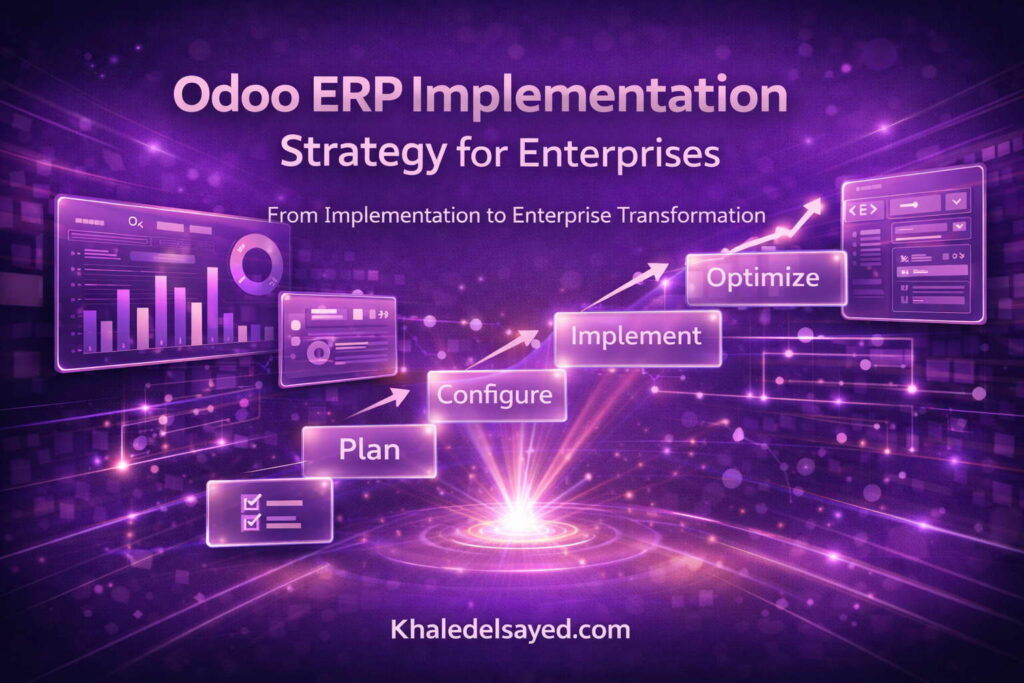
Conclusion: From Implementation to Enterprise Transformation
A successful odoo erp implementation is not merely a technology project; it is a strategic transformation initiative. Enterprises that follow a disciplined, phased approach—starting with readiness assessment, executing methodical erp deployment, investing heavily in change management, and optimizing post-go-live—consistently outperform those that treat ERP as a simple software upgrade. The step by step odoo erp implementation framework outlined here has been refined through real-world enterprise deployments, each revealing new lessons about what works and what fails.
As Khaled Elsayed Sqawa, my mission is to equip enterprise leaders with the insights needed to navigate this complex journey. Remember that the ultimate goal is not to install Odoo but to enable your organization to respond faster, serve customers better, and generate leads more efficiently. The technical aspects of odoo setup are well-documented; the strategic aspects are what separate market leaders from laggards. Begin your transformation by auditing one core process today. Map it, measure it, and then plan how Odoo will improve it. Your journey to enterprise efficiency and growth starts with that single step.
odoo erpnext, odoo erp vs erpnext, odoo erp modules, odoo erp software, odoo erp login, best odoo erp implementation services, best odoo erp services, best odoo erp consultant in dubai, benefits of odoo erp, best odoo erp, best odoo erp software, odoo erp course, zoho erp vs odoo erp, odoo erp system, advantages of odoo erp, arabic odoo erp kuwait, azkatech odoo erp lebanon, odoo erp pricing, all in one odoo erp extension, about odoo erp software, alternative to odoo erp, advantages and disadvantages of odoo erp, youtube odoo erp, odoo website, odoo web, odoo erp review, odoo windows 11, odoo ucp, who owns odoo erp, odoo trial, odoo terminal, what is odoo erp used for, odoo store, odoo slides, odoo sign, odoo sh pricing, odoo software, odoo support, odoo sh-restart, odoo studio, odoo runbot, what is odoo erp implementation, odoo run, odoo download, odoo partner, odoo system, which companies use odoo erp, odoo sh, odoo egypt, odoo mac, what is odoo erp development, odoo com, odoo login, odoo learn, odoo logo, what is odoo erp solutions, odoo kenya, odoo erpnext dolibarr, what are odoo erp implementation methodology, odoo members, odoo jobs, why choose odoo erp, odoo iqra, odoo iran, odoo india, odoo it yourself youtube, odoo hr, odoo help, odoo helpdesk, odoo hosting, what does odoo erp stand for, odoo hr module, odoo hr system, odoo h, odoo hotel management system, odoo hotel management, odoo hostinger, odoo github, odoo galala university, odoo gold partner, odoo github repository, voodoo erp, odoo gu login, odoo gu edu eg, odoo git, odoo glassdoor, odoo gold partners egypt, odoo farsi, odoo free, odoo flow, voodoo erp system, odoo formio, odoo firebase, odoo erp, odoo experts, odoo events, odoo vs erp, odoo ir, odoo development, odoo demo, odoo docs, odoo debug, odoo vs other erp, odoo crm, odoo community, odoo claw, odoo cloud, odoo erp vs microsoft dynamics, odoo apps, odoo vs oracle erp, odoo ai, odoo academy, odoo common util and tools, odoo ai cn, odoo apps github, odoo yodawy, odoo erp video, zoho vs odoo pricing, zkteco odoo integration, yenthe odoo script, youtube odoo tutorial, odoo vs erpnext, odoo erp vs netsuite, your odoo periodic digest, yeastar odoo integration, youtube odoo crm, youtube odoo mates, odoo erp versions, xero odoo connector, xero odoo integration, xpath odoo 18, xclusive odoo com, www odoo com website, www odoo com login, what is odoo developer, what is odoo software, udemy odoo erp, what is odoo erp, what is odoo sh, www odoo com download, www odoo demo, what is odoo system, www odoo cust, tutorial odoo erp, ucp odoo login, ucp odoo portal, toyota odoo erp, ucp odoo horizon, odoo upgrade, training odoo erp, ticket odoo support, tell me about odoo erp, software odoo erp, remote odoo jobs, quickbooks to odoo migration, sap vs odoo erp, simply odoo erp software, odoo vs erpnext reddit, sap odoo erp, odoo odoo github, odoo gu, nims odoo login, reviews odoo erp, nevermore odoo app store, nutech odoo login, reddit odoo erp, latest odoo version, que es odoo erp, logo odoo png, login with odoo ucp, kantor odoo indonesia, que significa odoo erp, jaming odoo com, que es un odoo erp, junior odoo developer, just1 odoo com, jmr odoo login, is odoo free, iqra odoo login, is odoo open source, python odoo erp, is odoo a crm, is odoo an erp, is odoo a erp system, is odoo website free, price of odoo erp, how to be odoo developer, how is odoo free, how much is odoo software, pros and cons of odoo erp, github odoo 18, gaming odoo com, github odoo enterprise, github odoo 17, github odoo 19, programming odoo erp, odoo vs erpnext comparison, oakland-odoo erp, extension odoo debug, download odoo 18, open source odoo erp, download odoo for windows, documentation odoo 18, download odoo app, cust odoo login, origin of odoo erp, batuk odoo com jobs, nanobytes odoo erp gold partner, managed odoo erp hosting, odoo app store, modules in odoo erp, meaning of odoo erp, learn odoo erp, logo odoo erp, login odoo erp, odoo vs erpnext which is better, latest version of odoo erp, key features of odoo erp, kfc odoo erp, kelebihan dan kekurangan odoo erp, kursus odoo erp, kekurangan odoo erp, jurnal odoo erp, is odoo erp good, is odoo erp or crm, is odoo erp software, odoo vs erpnext pricing, is odoo erp free, is odoo erp cloud based, is odoo erp open source, introduction to odoo erp, implementing odoo erp, hire odoo erp developer, harga odoo erp, how to learn odoo erp, how to pronounce odoo erp, how to use odoo erp, odoo vs erpnext vs dolibarr, how to implement odoo erp, how much does odoo erp cost, how does odoo erp work, github odoo erp, giới thiệu về odoo erp, features of odoo erp, free odoo erp, full form of odoo erp, erpnext vs odoo erp, odoo erp mongolia, odoo community vs erpnext, odoo erp meaning, download odoo erp, demo odoo erp, disadvantages of odoo erp, download odoo erp for windows, dashboard odoo erp, companies that use odoo erp, cost of odoo erp, customize odoo erp, crm odoo erp
Khaled Elsayed – Strategic Leadership in Digital Transformation and Enterprise IT
A distinguished career spanning over 19 years has been dedicated to the design, implementation, and optimization of enterprise-grade IT infrastructures. This professional journey is defined by a consistent commitment to leveraging technology as a fundamental driver of organizational efficiency and scalable growth.
Currently, the position of Digital Transformation and Information Technology Manager is held, with a focus on spearheading strategic initiatives to modernize technological foundations and strengthen data security frameworks. Responsibilities in this capacity include the oversight of integrated ERP system deployments, the formulation of comprehensive IT policies, and the management of departmental budgets and procurement processes.
Prior to the current engagement, several senior leadership roles were occupied, including Group IT Section Head and IT Section Head. During these tenures, successful large-scale infrastructure upgrades were led, and business continuity frameworks were implemented to ensure uninterrupted operational performance. Expertise has been consistently demonstrated in aligning IT strategies with overarching business objectives while leading high-performing technical teams.
The academic foundation consists of a Bachelor’s degree in Information Systems. This is further reinforced by an extensive portfolio of international professional certifications, including:
- MCSA (Microsoft Certified Systems Administrator).
- Dynamic Specialist (Microsoft Certified Business Management Solutions Specialist).
- Google Certified Project Management Professional.
- SAP Technology Consultant.
- Oracle Cloud Infrastructure Architect Professional.
- Google Certified Cybersecurity Professional.
- ServiceNow IT Leadership Professional Certificate by LinkedIn Learning.
- Succeeding as a Senior Manager Professional Certificate by LinkedIn Learning.
- IT Service Management ISO20000 by LinkedIn Learning.
- Google Certified IT Support Professional.
The leadership philosophy remains centered on continuous improvement, integrity, and the transformation of complex technical visions into functional digital realities that empower the modern enterprise.
Khaled Elsayed www.khaledelsayed.com | linkedin.com/in/khaled-elsayed-it