What is Odoo ERP and How It Works
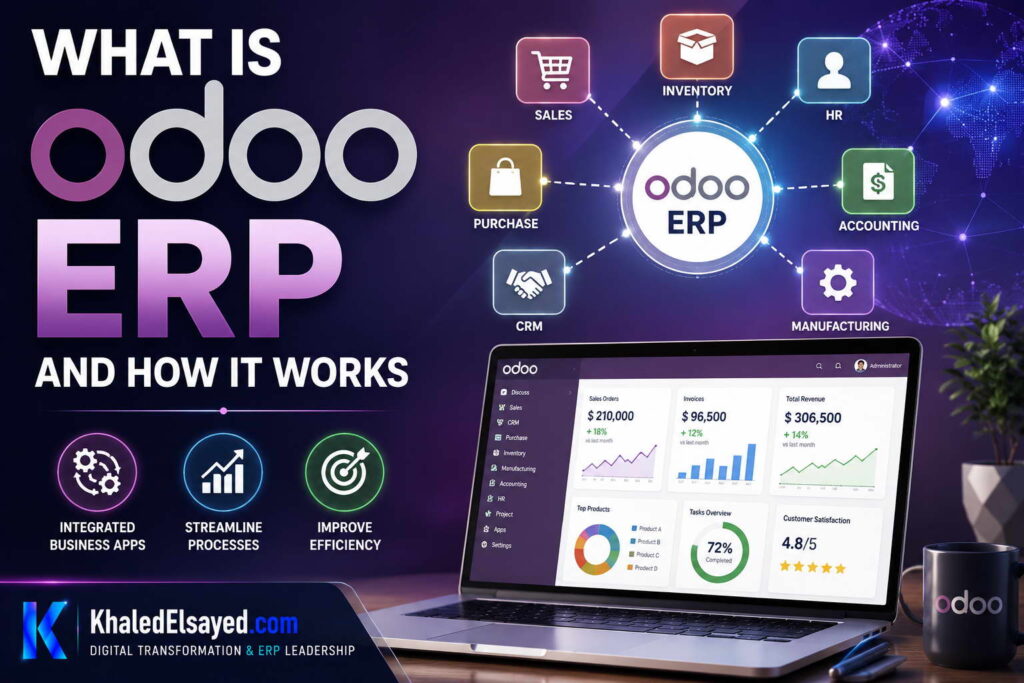
In my years leading digital transformation across enterprise IT environments, I have observed a recurring challenge: organizations outgrow their disconnected systems but find traditional ERP solutions too rigid or expensive. This is where what is odoo erp becomes a critical question. Odoo has emerged as a compelling alternative in the ERP landscape, offering a modular, open-source architecture that adapts to business needs rather than forcing businesses to adapt to the software. In this comprehensive guide, I will explain what is odoo erp and how it works in business, drawing from real-world implementations I have overseen across manufacturing, distribution, retail, and professional services.
What is Odoo ERP? Understanding the Core Concept
The odoo system is an open-source enterprise resource planning platform that has grown from a small business accounting solution into a full-featured ERP suite. What distinguishes odoo software from traditional ERP systems is its modular architecture—you start with the applications you need and add more as your business grows. From my experience, this modularity is not just a technical feature; it fundamentally changes how organizations approach erp system adoption.
When I advise organizations on what is odoo erp, I emphasize that it is not a single monolithic application but an ecosystem of over 30 core applications and thousands of community modules. These range from sales and accounting to inventory, manufacturing, HR, project management, and e-commerce. The odoo system architecture allows businesses to implement only what they need today, with the flexibility to expand tomorrow without the costly “big bang” migration that plagues traditional ERP deployments.
How Odoo ERP Works: Architecture and Technical Foundation
Understanding what is odoo erp and how it works in business requires examining its technical architecture. Odoo is built on a modern, open-source technology stack: Python for the backend, PostgreSQL for the database, and a responsive web-based interface that works across devices. This architecture is designed for scalability and customization, two factors I consistently evaluate when assessing ERP solutions for clients.
The architecture follows a three-tier model that I have found to be both robust and flexible:
Presentation Tier: The user interface is entirely web-based, accessible through any modern browser or mobile device. I have seen this significantly reduce training time and user resistance compared to traditional client-server ERP systems. The interface adapts to the user’s role, presenting only relevant information—a design principle that drives adoption.
Application Tier: This is where the business logic resides. Odoo’s application server processes requests, executes workflows, and enforces business rules. The modular design means that each application—sales, inventory, manufacturing—operates independently but shares a common data model. In my experience, this decoupling simplifies customization and upgrades.
Data Tier: PostgreSQL serves as the database layer, ensuring data integrity and transactional consistency. The database schema is well-documented and follows normalization principles that support complex reporting requirements.
Data Flow: How Modules Communicate
One of the most common questions I receive about what is odoo erp is how its modules work together. The answer lies in the shared data model. When a sales order is confirmed in the Sales module, the system can automatically create a delivery order in Inventory, generate an invoice in Accounting, and trigger procurement in Purchase—all without manual intervention. This integration is the essence of odoo software value proposition.
From my technical assessments, the data flow follows predictable patterns:
Sales → Inventory: A confirmed sales order reserves stock and creates a picking list. This real-time integration prevents overselling—a critical requirement for e-commerce businesses I have worked with.
Procurement → Purchase: When inventory levels fall below configured thresholds, the system automatically generates purchase orders for replenishment. This automation reduces procurement cycle time and ensures optimal stock levels.
Manufacturing → Inventory → Accounting: Production orders consume raw materials, create finished goods, and generate cost postings to the general ledger. This closed-loop process provides real-time visibility into manufacturing costs—a capability that manufacturing clients consistently value.
Core Odoo Modules Explained
When I explain what is odoo erp and how it works in business, I typically break down the key modules that form the foundation of most implementations. The modular approach allows organizations to choose only what they need, but the integration across modules delivers the true value.
Sales and CRM Module
The Sales module manages the entire customer journey from lead to invoice. It includes CRM capabilities for tracking opportunities, sales pipelines, and customer interactions. In my experience, the quote-to-cash workflow is where organizations first see the value of Odoo—a sales quote becomes a sales order, which triggers inventory reservation, delivery, and invoicing without re-entering data.
Key features I highlight when advising organizations on odoo system sales capabilities include: opportunity management, quotation and order processing, pricing and discount rules, delivery scheduling, and automated invoicing. The integration with the CRM module ensures that sales teams have complete visibility into customer history and pipeline status.
Inventory Management Module
Inventory management is a cornerstone of odoo software for product-based businesses. The module provides real-time stock visibility across multiple warehouses, locations, and bins. I have seen organizations achieve 98%+ inventory accuracy after implementing Odoo’s cycle counting and automated stock valuation features.
Essential features include: multi-warehouse support, serial and lot number tracking, FIFO and average costing methods, reorder point automation, and physical inventory management. The system can also handle advanced warehouse operations like drop-shipping, cross-docking, and kitting.
Accounting and Finance Module
Odoo’s accounting module is surprisingly robust for an open-source platform. It includes double-entry accounting, accounts receivable and payable, bank reconciliation, tax management, and comprehensive financial reporting. I have guided organizations through the transition from QuickBooks to Odoo’s accounting, and the sophistication of the module consistently exceeds expectations.
Key capabilities include: chart of accounts configuration, multi-currency support, automated invoice generation, payment processing, cash flow management, and financial statement generation. The real-time connection with sales and inventory modules ensures that financial data is always current—a significant improvement over the batch-processing approach of many legacy systems.
Manufacturing Module
For manufacturing organizations, Odoo offers a comprehensive manufacturing module that supports both discrete and process manufacturing. The module includes bill of materials management, work order creation, routing and scheduling, and material requirements planning (MRP).
In my implementation experience, the MRP functionality is particularly valuable. It calculates material requirements based on production schedules, considers current inventory levels, and generates purchase orders for missing components. This automated planning reduces material shortages and minimizes expedited shipping costs.
Purchase and Procurement Module
The Purchasing module streamlines the procure-to-pay process. It supports purchase requisitions, requests for quotation, vendor selection, purchase order creation, and receipt processing. The integration with inventory and accounting creates a seamless workflow: a purchase order automatically updates expected receipts, and when goods are received, the system updates inventory and creates the corresponding accounting entries.
Human Resources Module
The HR module manages employee records, recruitment, attendance, leave requests, and payroll. While not as comprehensive as specialized HR solutions, it provides essential functionality for most organizations. I often recommend implementing the HR module alongside the Expenses module to create integrated employee expense reporting.
Project Management Module
The Project module tracks project progress, tasks, and resource allocation. It integrates with Timesheets to capture labor costs and with Invoicing to generate project-based billing. For service organizations, this module delivers significant value by providing real-time visibility into project profitability.
E-Commerce Module
Odoo’s e-commerce capabilities allow businesses to create and manage online stores directly from the ERP. The integration between the e-commerce site and back-end operations is the key advantage—orders flow automatically into the fulfillment process, inventory updates in real-time, and customers receive accurate shipping information.
Key Features of Odoo ERP
Based on my observations across numerous implementations, several features distinguish what is odoo erp from competing solutions. These features contribute directly to the business value organizations realize.
Modular Architecture: The ability to implement only the required modules and add more as needs evolve is not just a technical advantage but a risk management strategy. I have seen organizations avoid the complexity of full-scale implementations by starting with core financials and inventory, then expanding to manufacturing and e-commerce as they grow.
Open Source Foundation: Access to source code provides flexibility that proprietary solutions cannot match. Organizations can customize the system to their exact requirements without waiting for vendor roadmaps. However, I always caution that customizations must be managed carefully to avoid upgrade challenges.
Responsive User Interface: The modern, web-based interface reduces training time and accelerates user adoption. In implementations I have directed, users typically become productive within 2-3 weeks—significantly faster than traditional ERP systems.
Built-in Integration: Odoo’s modules are designed to work together from the start. This native integration eliminates the need for costly middleware and reduces the risk of integration failures—a common source of budget overruns in ERP projects.
Scalability: Odoo scales from 10-user deployments to hundreds of users. I have worked with organizations that successfully run Odoo across multiple countries and legal entities, demonstrating its enterprise readiness.
Benefits and Business Value of Odoo ERP
Throughout my ERP implementations, I have quantified the benefits that organizations realize from odoo software. The specific benefits vary by industry and scope, but several patterns consistently emerge.
Reduced Total Cost of Ownership
One of the most compelling advantages of the odoo system is the lower TCO compared to proprietary ERP solutions. The open-source license model eliminates significant licensing costs, and the modular implementation approach allows organizations to phase investments over time. In my experience, organizations typically achieve 40-60% lower TCO over five years compared to traditional ERP alternatives.
Faster Implementation Timeline
The phased implementation approach, combined with Odoo’s comprehensive out-of-the-box functionality, typically results in faster go-live timelines. I have led implementations that delivered core financial and inventory functionality within 3-4 months—a timeline that would be unrealistic with many enterprise ERP systems.
The table below summarizes typical implementation timelines by scope:
| Scope | Modules | Typical Timeline |
|---|---|---|
| Core financials | Accounting, Sales, Purchasing | 2-3 months |
| Core operations | Accounting, Sales, Purchasing, Inventory | 3-4 months |
| Full ERP | All modules (Finance, Sales, Inventory, Manufacturing, HR, Projects) | 6-9 months |
Improved Process Efficiency
Automation of manual processes is a primary driver of ROI. In implementations I have directed, organizations typically achieve:
Order processing time reduced by 50-70%, inventory accuracy improved to 95-98%, procurement cycle time reduced by 40-60%, and financial close time reduced from weeks to days. These efficiency gains translate directly to reduced operating costs and improved customer satisfaction.
Real-Time Visibility
The integrated nature of Odoo provides real-time visibility across the enterprise. Management can access dashboards showing sales performance, inventory levels, production status, and financial metrics—all from a single system. This visibility enables faster, more informed decision-making.
Common Challenges and Solutions
Despite its many advantages, Odoo implementation presents challenges that organizations must address. One of the most common challenges I encounter is data migration—organizations underestimate the effort required to cleanse and migrate data from legacy systems. The solution is a structured data migration approach with multiple test cycles.
User adoption is another significant challenge. Employees accustomed to familiar systems may resist the change. My professional advice: invest in comprehensive training and identify power users who can champion the system within their departments.
Customization management is a third challenge. While Odoo’s open-source nature enables extensive customization, excessive customization creates upgrade difficulties. The best practice I recommend is to configure rather than customize, using the extensive configuration options before resorting to code modifications.
Best Practices from Real Odoo Implementations
Across my portfolio of Odoo implementations, several practices consistently distinguish successful projects from those that struggle. These best practices reflect lessons learned from real-world experience.
Start Small and Expand: Begin with core modules—typically sales, purchasing, inventory, and accounting. Stabilize these foundational processes before adding manufacturing, e-commerce, or other advanced modules.
Data Cleansing Before Migration: Cleanse data before moving it to Odoo. Legacy data with duplicates, inconsistencies, and incomplete records will create problems in the new system. Allocate sufficient time and resources for data preparation.
Engage Users Early: Involve end-users in the implementation process. Their input on workflows and preferences improves adoption and ensures the system supports actual business processes.
Use Odoo’s Configuration Options: Odoo provides extensive configuration options—use them before considering custom code. Configuration is upgrade-safe; custom code creates upgrade debt.
Real-World Use Cases
Case Study: Distribution Company Transformation A wholesale distributor with 5,000 SKUs and three warehouses implemented Odoo’s inventory, sales, and accounting modules. Within six months, they achieved 98% inventory accuracy, reduced stockouts by 60%, and cut order fulfillment time from 24 hours to 4 hours. The integrated system replaced six separate applications, eliminating data duplication and reconciliation effort.
Case Study: Manufacturer Streamlines Operations A custom furniture manufacturer implemented Odoo’s manufacturing, inventory, and project modules. The MRP functionality reduced material shortages by 70%, and the project tracking capability improved on-time delivery from 78% to 95%. The system now provides real-time visibility into job costs, enabling accurate pricing for custom orders.
Case Study: E-Commerce Retailer Scales A DTC retailer integrated Odoo with their Shopify storefront. The seamless integration eliminated manual order entry, reduced fulfillment errors, and provided real-time inventory visibility across the website and warehouse. The business scaled from 200 to 800 daily orders with no increase in administrative headcount.
Industry Applications of Odoo ERP
Manufacturing: Odoo’s manufacturing module supports discrete and process manufacturing. Features include BOM management, MRP, work order tracking, and quality control. Organizations of all sizes use Odoo for manufacturing operations.
Distribution and Wholesale: Inventory management, multi-warehouse support, and integrated procurement make Odoo ideal for distribution businesses. The system’s ability to manage complex pricing and customer-specific catalogs is particularly valuable.
Retail and E-Commerce: Odoo’s e-commerce integration, POS system, and inventory management support retail operations across channels. I have worked with retailers who use Odoo to manage physical stores, online shops, and wholesale channels from a single platform.
Professional Services: Project management, timesheets, and integrated billing make Odoo suitable for service organizations. The ability to track project profitability in real-time supports better project selection and resource allocation.
Implementation Roadmap
Based on my project management experience, a successful odoo software implementation follows a structured approach. Phase 1: Discovery and Planning (4-6 weeks) – Document business processes, define requirements, and map them to Odoo modules. This phase establishes the foundation for configuration decisions.
Phase 2: Core Configuration (6-8 weeks) – Configure core modules: accounting, sales, purchasing, and inventory. Establish chart of accounts, product catalog, customer and vendor master data, and initial workflows.
Phase 3: Advanced Configuration (4-6 weeks) – Configure additional modules as needed: manufacturing, projects, HR, e-commerce, etc. This phase may run concurrently with Phase 2 for larger implementations.
Phase 4: Data Migration (4-6 weeks) – Extract, cleanse, transform, and load data from legacy systems. Run multiple test migrations before the final cutover.
Phase 5: Testing and UAT (4-6 weeks) – Conduct unit testing, integration testing, and user acceptance testing. Include process owners from each department in UAT.
Phase 6: Go-Live and Hypercare (2-4 weeks) – Execute cutover, conduct training, and provide intensive support during the stabilization period.
Security Considerations
In enterprise environments I have worked with, security is a primary concern when evaluating what is odoo erp. Odoo provides robust security features including role-based access control, user authentication, and data encryption. I recommend implementing multi-factor authentication, regular security audits, and strict user permission policies aligned with segregation of duties.
Future Trends
The odoo system continues to evolve rapidly. AI integration, with built-in AI capabilities for demand forecasting, anomaly detection, and intelligent automation, is increasingly valuable. Enhanced mobile capabilities, including improved mobile app functionality for field workers and managers, are also advancing. The Odoo ecosystem continues to expand, with more third-party apps and integrations becoming available.
My Professional Perspective
When advising executives on what is odoo erp and how it works in business, I emphasize that Odoo is particularly well-suited for organizations that need flexibility and value without the complexity of traditional enterprise ERP. The modular architecture enables organic growth—you do not need to implement everything at once. However, the open-source model requires organizational discipline; customizations must be managed carefully to avoid upgrade challenges.
My strategic advice is to start with a clear business objective—reducing inventory, accelerating order fulfillment, or improving financial reporting—and select the modules that directly support that objective. Prove value with a focused implementation, then expand to additional areas. This approach reduces risk, accelerates ROI, and builds organizational momentum.
I also advise organizations to evaluate their internal technical capabilities. While Odoo does not require deep technical expertise for configuration, organizations planning extensive customization should have access to Python and JavaScript development resources or partner with an experienced implementation firm.
Frequently Asked Questions
What is Odoo ERP and is it suitable for small businesses?
Odoo ERP is a modular, open-source enterprise resource planning system. Yes, it is highly suitable for small businesses due to its flexible, pay-as-you-grow model. Organizations can start with a few modules and expand as needed.
How does Odoo compare to proprietary ERP systems?
From my experience, Odoo offers lower TCO, faster implementation, and greater flexibility compared to proprietary systems. However, organizations should have internal technical capabilities or partner with experienced implementers to manage customizations effectively.
Can Odoo handle multi-company and multi-currency operations?
Yes, Odoo supports multi-company and multi-currency configurations. I have implemented Odoo for organizations operating in multiple countries with complex intercompany transactions.
What is the typical cost of Odoo ERP?
Odoo’s community edition is free. The enterprise edition pricing is subscription-based and depends on the number of users and modules selected. Implementation costs vary based on scope and partner rates.
How long does an Odoo implementation typically take?
For a core implementation (finance, sales, purchasing, inventory), I typically estimate 3-5 months. Full ERP implementation with manufacturing, projects, and e-commerce modules may take 6-9 months.
Is Odoo secure for business-critical operations?
Yes, Odoo provides enterprise-grade security features. With proper configuration, regular updates, and security best practices, it is suitable for business-critical operations. I recommend implementing multi-factor authentication and regular security audits.
Conclusion
Understanding what is odoo erp and how it works in business reveals a powerful, flexible alternative to traditional ERP systems. The modular architecture, open-source foundation, and comprehensive functionality make Odoo suitable for organizations ranging from startups to established enterprises. The key to success lies in disciplined implementation—starting with core modules, cleansing data before migration, and managing customizations carefully.
From my years of leading ERP implementations, I have found that the organizations that succeed with Odoo are those that view it not as a one-time project but as a platform for continuous improvement. The flexibility of the odoo system enables ongoing optimization as business needs evolve. My professional recommendation is to evaluate Odoo for its potential to reduce costs, improve efficiency, and provide the real-time visibility that modern businesses require.
Meta Description: Digital transformation expert Khaled Elsayed Sqawa explains what is Odoo ERP and how it works in business. Comprehensive guide covering modules, architecture, benefits, and implementation strategies.
Suggested Tags: Odoo ERP, Open Source ERP, Odoo Modules, ERP Implementation
Khaled Elsayed Sqawa
I am Khaled Elsayed Sqawa, a Senior IT Manager, Digital Transformation Leader, and ERP Consultant with more than 19 years of experience in Information Technology, Digital Transformation, Enterprise Infrastructure, Cybersecurity, Cloud Computing, and ERP Systems.
Throughout my career, I have led large-scale technology initiatives across the FMCG, Manufacturing, Education, and Non-Profit sectors, helping organizations modernize their operations, optimize business processes, strengthen cybersecurity, and leverage technology as a strategic driver of growth and operational excellence.
My expertise covers Digital Transformation Strategy, ERP Implementation and Optimization, Enterprise Infrastructure Management, Cloud Architecture, Cybersecurity, IT Governance, Business Continuity, IT Service Management, Data Centers, Vendor Management, Budget Planning, Process Automation, and Technology Leadership. I have successfully implemented and managed Odoo ERP, Microsoft Dynamics, Microsoft Great Plains, Microsoft 365, Google Workspace, Oracle Cloud Infrastructure, Sophos Firewall, FortiGate Security Solutions, and enterprise network environments.
Currently, I serve as Digital Transformation and Information Technology Manager, where I lead ERP modernization, workflow automation, cybersecurity enhancement, infrastructure development, e-learning platforms, and organization-wide digital transformation initiatives. Throughout my professional journey, I have also held leadership positions including Group IT Section Head and IT Section Head, managing enterprise environments, multi-site operations, nationwide IT support services, infrastructure modernization programs, and business-critical technology projects.
I hold a Bachelor’s Degree in Information Systems and a broad portfolio of internationally recognized professional certifications, including:
• Oracle Cloud Infrastructure Architect Professional
• SAP Technology Consultant
• Google Project Management Professional Certificate
• Google Cybersecurity Professional Certificate
• Microsoft Certified Systems Administrator (MCSA)
• Microsoft Certified Business Management Solutions Specialist (Dynamics Specialist)
• ServiceNow IT Leadership Professional Certificate
• Succeeding as a Senior Manager Professional Certificate
• IT Service Management ISO 20000 Professional Certificate
• Google IT Support Professional Certificate
• ITIL 4 Foundation (Self Study)
I believe that technology should not merely support business operations—it should transform them. My mission is to bridge the gap between business objectives and technology capabilities, enabling organizations to achieve sustainable growth, operational excellence, digital resilience, and long-term success.
Khaled Elsayed Sqawa
خالد السيد سقاوة
Senior IT Manager | Digital Transformation Leader | ERP Consultant | Cloud & Infrastructure Architect
Website: https://www.khaledelsayed.com
LinkedIn: https://www.linkedin.com/in/khaled-elsayed-it