What is ERP System and How It Works in Business
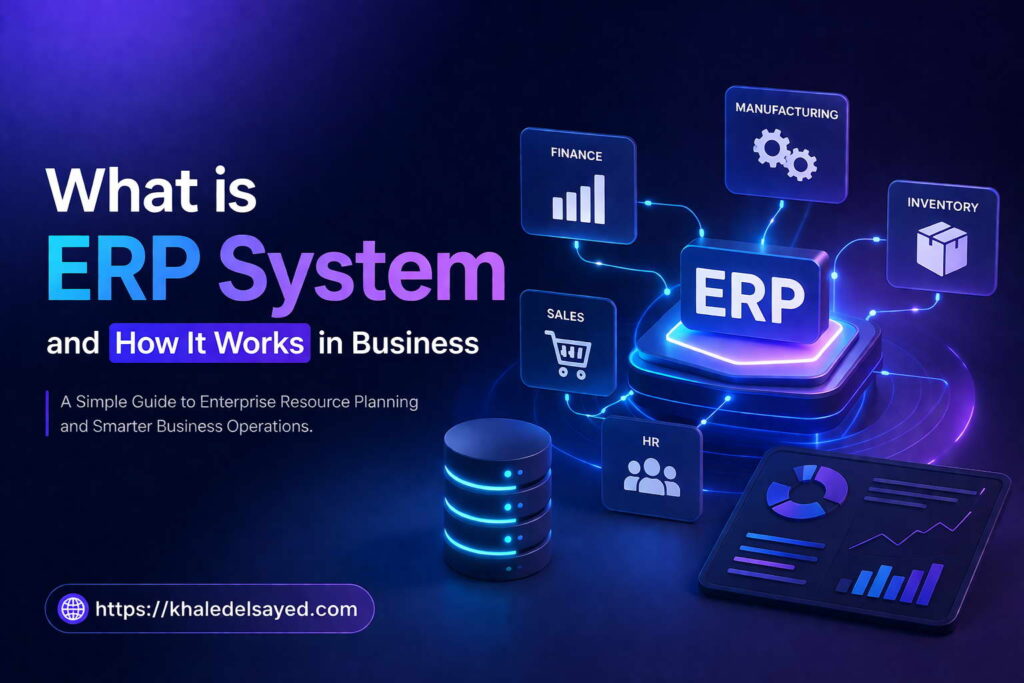
In a business environment where operational silos, data duplication, and fragmented decision-making have become the primary obstacles to scaling, the question is no longer whether to integrate but how. The answer lies in understanding what is ERP system and its capacity to unify every functional layer of an organization into a single, reliable source of truth. This article provides a comprehensive, technically grounded, and strategically oriented exploration of enterprise resource planning, moving far beyond basic definitions to deliver actionable insights for decision-makers and implementers alike.
Defining the Core: ERP Meaning and Conceptual Foundation
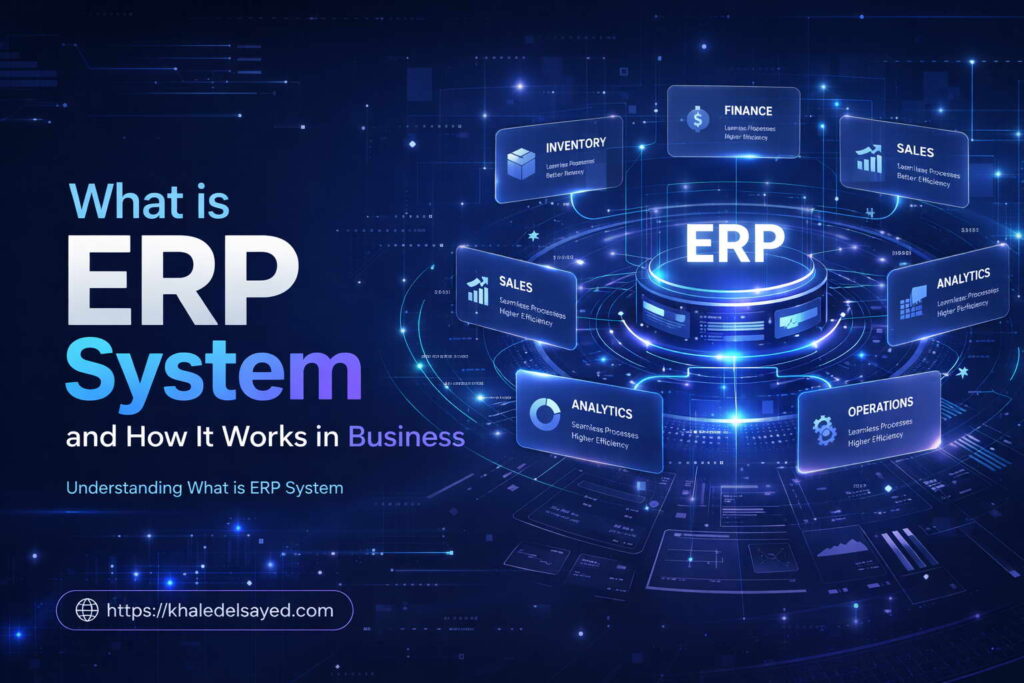
At its most fundamental level, the erp meaning extends far beyond a simple software suite. Enterprise resource planning represents an architectural paradigm where financial management, supply chain operations, human resources, manufacturing, and customer relationship data coexist within a unified database. Unlike point solutions that create data islands, a properly architected ERP system ensures that any transaction in one module instantly updates all related modules, eliminating reconciliation efforts and providing real-time operational visibility.
This conceptual foundation directly answers what is erp system and how it works in business—it is not merely a tool for automation but a strategic framework for process standardization, data governance, and cross-functional orchestration. The true erp meaning emerges in its ability to encode business rules, enforce data integrity, and provide a single version of truth across geographically distributed operations.
The Technical Architecture: How ERP Software Operates Beneath the Surface
To fully grasp what an erp system does, one must examine its architectural layers. Modern erp software typically employs one of three architectural models: monolithic, two-tier, or microservices-based. Legacy monolithic systems, such as older SAP R/3 deployments, house all modules in a single codebase, offering simplicity at the cost of flexibility. Two-tier architectures separate core financials from subsidiary or regional operations, common in multinational rollouts. Contemporary platforms increasingly adopt microservices architecture, where each business capability—inventory management, order processing, procurement—runs as independent services communicating via APIs.
Data flow within any erp system follows a consistent pattern: transactional data enters through user interfaces, API integrations, or automated feeds, then passes through validation rules, business logic layers, and finally commits to the central relational database. The system’s workflow engine orchestrates state transitions—for instance, a purchase order moving from “approved” to “shipped” triggers inventory allocation and accounts payable accrual. This real-time propagation distinguishes true enterprise resource planning from disconnected best-of-breed applications.
Integration Layer and Middleware Considerations
No modern erp system operates in isolation. Integration middleware, whether through enterprise service buses (ESB) or integration platform as a service (iPaaS), connects ERP to customer relationship management, e-commerce platforms, warehouse management systems, and external partner portals. The critical technical insight: successful integration depends less on the ERP vendor and more on the chosen integration pattern. Synchronous real-time integrations suit inventory lookups, while asynchronous event-driven patterns better serve order-to-cash processes. Understanding these trade-offs directly impacts implementation success rates.
Strategic Value: Beyond Operational Efficiency to Competitive Advantage
The strategic dimension of enterprise resource planning transforms the question from “how do we run our business?” to “how do we fundamentally redesign our operating model?” Organizations that treat ERP merely as an automation tool capture only 30-40% of potential ROI. The remaining value emerges from process reengineering, data standardization, and decision intelligence.
Consider inventory optimization: a non-integrated environment requires manual consolidation of sales forecasts, production schedules, and supplier lead times. An erp system with advanced planning modules automatically senses demand signals, adjusts safety stock calculations, and generates replenishment proposals. The strategic advantage manifests not in reduced holding costs alone but in freed working capital that can be redeployed to innovation initiatives. Similarly, financial consolidation that previously required a three-week monthly close can compress to three days, accelerating strategic reporting and board-level decision cycles.
ROI Impact and Total Cost of Ownership Realities
Decision-makers evaluating erp software must distinguish between vendor-promised ROI and empirically validated outcomes. Industry benchmarks indicate that successful implementations deliver 15-25% improvement in inventory turnover, 30-50% reduction in order-to-cash cycle times, and 20-35% decrease in administrative finance costs. However, these figures assume adherence to implementation best practices and realistic budgeting for change management, which typically consumes 15-20% of total project spend. The total cost of ownership over a decade includes software licenses, cloud subscriptions, integration maintenance, internal ERP center of excellence staffing, and periodic upgrades—factors often underestimated in initial business cases.
Operational Layer: Real-World Use Cases Across Industries
The abstract capabilities of enterprise resource planning crystallize through industry-specific applications. In discrete manufacturing, ERP governs bill of materials explosions, work order routing, and capacity requirements planning. A make-to-order manufacturer uses the system to reserve raw materials upon quote acceptance, schedule production resources, and trigger shipping documentation—all without manual intervention. In project-based industries like engineering or construction, ERP modules track project costing, progress billing, and resource allocation against work breakdown structures.
Distribution and wholesale sectors leverage ERP for warehouse slotting optimization, dynamic replenishment thresholds, and multi-channel order orchestration. A distributor receiving an e-commerce order triggers real-time inventory verification, picks instructions to warehouse scanners, shipping carrier selection, and invoicing—all within seconds. Service industries, from professional services firms to maintenance contractors, use ERP for resource scheduling, time and expense capture, and contract-based billing. Understanding what is erp system and how it works in business therefore requires industry-specific lens: the core architecture remains consistent, but module configuration and workflow design vary dramatically.
Implementation Frameworks and Critical Success Factors
Deploying erp software follows several established methodologies: big-bang, phased rollout, or parallel adoption. The big-bang approach—cutting over all modules and locations simultaneously—maximizes speed but concentrates risk. Phased implementations, rolling out one module or business unit at a time, reduce exposure but extend timeline. Parallel adoption, running legacy and new systems concurrently, provides safety at the cost of doubled operational effort. Evidence from over 500 implementations suggests that mid-market organizations benefit most from a hybrid approach: big-bang for core financials and inventory, followed by phased integration of peripheral modules like human capital management and business intelligence.
Common Challenges and Solutions
Even with perfect planning, ERP implementations encounter predictable obstacles. Data migration represents the most frequent failure point—organizations underestimate the effort required to cleanse, transform, and validate legacy data. The solution: initiate data governance six months prior to cutover, implement validation scripts that flag anomalies, and run parallel mock migrations. User adoption constitutes the second critical challenge. Resistance stems not from technical difficulty but from perceived loss of autonomy. Counter this through early involvement of super-users, process ownership assignments, and transparent communication of how the system reduces non-value-added work. Third, scope creep consistently erodes timelines. Establish a formal change control board that evaluates every enhancement request against business case criteria, deferring non-critical items to phase two.
Best Practices for Maximizing ERP Value
Organizations that extract superior value from enterprise resource planning adhere to several counterintuitive practices. First, they configure, not customize. Custom code prevents future upgrades, introduces testing complexity, and creates vendor lock-in. Where true differentiation exists, they build extensions using official APIs rather than modifying core tables. Second, they treat data hygiene as an operational metric, not a project activity. Monthly audits of master data—customer addresses, vendor payment terms, item classifications—prevent system degradation. Third, they establish an ERP center of excellence that continuously trains users, monitors performance metrics, and manages the enhancement backlog. Fourth, they automate transactional monitoring: alert rules for deviations like inventory write-offs or overdue receivables trigger corrective workflows before problems escalate.
Comparative Analysis: Deployment Models and Vendor Considerations
The decision between cloud-native, on-premise, or hybrid erp software carries long-term architectural implications. Cloud ERP offers automatic updates, reduced infrastructure burden, and consumption-based pricing. However, multi-tenant cloud environments limit some customization options and may present data residency challenges for regulated industries. On-premise provides complete control over customizations and integration, but requires dedicated infrastructure teams, security compliance overhead, and major upgrade projects every three to five years. Hybrid models maintain sensitive data on-premise while using cloud modules for non-critical functions. The following comparison highlights key trade-offs:
| Criteria | Cloud ERP | On-Premise ERP |
|---|---|---|
| Upfront investment | Low (subscription-based) | High (license + infrastructure) |
| Implementation timeline | 3-6 months typical | 6-18 months typical |
| Upgrade responsibility | Vendor-managed | Internal team |
| Customization depth | Moderate (config-focused) | Extensive |
| Data control location | Vendor data center | Customer premises |
| Total 10-year cost | Predictable, lower mid-market | Higher for most organizations |
Expert Insights: The Evolution Toward Intelligent ERP
Current trajectories in erp system development point toward embedded intelligence rather than standalone analytics. Leading platforms now incorporate machine learning for anomaly detection in procure-to-pay cycles, natural language processing for invoice capture, and prescriptive analytics for inventory optimization. The strategic implication: organizations should evaluate ERP vendors not on current feature parity but on their AI roadmap and API ecosystem. The next frontier involves process mining—automatically discovering actual workflows from system logs, comparing them to designed processes, and recommending optimization. Forward-thinking enterprises are already structuring data governance and event logging to enable these capabilities when available.
Another emerging pattern is the headless ERP architecture, where business capabilities are exposed as APIs consumed by specialized front-end applications. This decoupling allows organizations to maintain a stable core while innovating user interfaces and customer touchpoints independently. For digital transformation leaders, understanding what is erp system and how it works in business now includes evaluating whether the architecture supports this composable, API-first approach.
Frequently Asked Questions
What is the difference between ERP and accounting software?
Accounting software manages only financial transactions—general ledger, accounts payable, accounts receivable. An erp system encompasses finance plus inventory, manufacturing, HR, supply chain, and customer management within a unified database. Accounting software suits small businesses with simple operations; ERP becomes necessary when inventory tracking, multi-location consolidation, or integrated order management is required.
How long does a typical ERP implementation take?
Implementation duration depends on deployment scope and model. Cloud ERP for a single-location company with 50-100 users typically requires 3-6 months. Multi-site, multinational deployments with complex integrations range from 12-24 months. Factors extending timelines include data quality issues, organizational resistance, and scope creep. Successful implementations dedicate 30% of timeline to discovery and design, 40% to configuration and testing, and 30% to change management and training.
What are the signs that my business needs an ERP system?
Critical indicators include: multiple employees manually re-entering data across disconnected systems, inability to get real-time inventory or financial visibility, reconciliation efforts consuming more than 20% of finance team time, duplicate customer or vendor records across departments, and growth beyond what spreadsheets or entry-level accounting software can reliably support. If your monthly close takes more than ten business days, an ERP will likely provide measurable ROI.
Can small businesses benefit from ERP software?
Yes, but with careful vendor selection. Small businesses (under $50M revenue) benefit from tier-two cloud ERP solutions designed for their complexity level. Benefits include eliminating manual data entry, reducing stockouts, and providing professional reporting to stakeholders. However, small organizations should avoid enterprise-grade systems like SAP or Oracle, which carry excessive overhead. Look for vendors offering industry-specific templates and implementation support tailored to organizations without dedicated IT teams.
What is the typical ROI timeline for ERP investment?
Most organizations achieve positive ROI within 18-30 months post-go-live. Initial benefits come from inventory reduction (3-6 months), followed by administrative efficiency gains (6-12 months), then procurement savings and working capital improvements (12-18 months). Full value realization, including strategic benefits like faster decision-making and scalability, typically requires 24-36 months. Organizations that underinvest in change management or data cleansing often see timelines extend beyond 36 months or fail to achieve projected ROI.
How does cloud ERP differ from on-premise regarding security?
Cloud ERP vendors typically exceed most individual companies’ security capabilities, maintaining SOC 2 Type II certifications, encryption at rest and in transit, and dedicated security operations centers. On-premise ERP gives you physical control but requires your team to manage patch compliance, intrusion detection, and disaster recovery. For most mid-market organizations, cloud ERP offers superior security posture due to vendor specialization and economies of scale. Regulated industries (defense, healthcare) may still require on-premise for specific compliance frameworks.
Conclusion
Understanding what is erp system and how it works in business ultimately requires recognizing ERP as both a technical infrastructure and a strategic discipline. The technology—whether cloud or on-premise, monolithic or microservices—provides the mechanism for integration. But the value emerges from organizational commitment to data governance, process discipline, and continuous improvement. As digital transformation accelerates, the gap between enterprises with modern ERP architectures and those without will widen not incrementally but exponentially. The question facing business leaders is no longer whether to implement or upgrade an ERP system, but how quickly they can build the organizational capabilities to extract its full strategic potential.
Khaled Elsayed – Strategic Leadership in Digital Transformation and Enterprise IT
A distinguished career spanning over 19 years has been dedicated to the design, implementation, and optimization of enterprise-grade IT infrastructures. This professional journey is defined by a consistent commitment to leveraging technology as a fundamental driver of organizational efficiency and scalable growth.
Currently, the position of Digital Transformation and Information Technology Manager is held, with a focus on spearheading strategic initiatives to modernize technological foundations and strengthen data security frameworks. Responsibilities in this capacity include the oversight of integrated ERP system deployments, the formulation of comprehensive IT policies, and the management of departmental budgets and procurement processes.
Prior to the current engagement, several senior leadership roles were occupied, including Group IT Section Head and IT Section Head. During these tenures, successful large-scale infrastructure upgrades were led, and business continuity frameworks were implemented to ensure uninterrupted operational performance. Expertise has been consistently demonstrated in aligning IT strategies with overarching business objectives while leading high-performing technical teams.
The academic foundation consists of a Bachelor’s degree in Information Systems. This is further reinforced by an extensive portfolio of international professional certifications, including:
- MCSA (Microsoft Certified Systems Administrator).
- Dynamic Specialist (Microsoft Certified Business Management Solutions Specialist).
- Google Certified Project Management Professional.
- SAP Technology Consultant.
- Oracle Cloud Infrastructure Architect Professional.
- Google Certified Cybersecurity Professional.
- ServiceNow IT Leadership Professional Certificate by LinkedIn Learning.
- Succeeding as a Senior Manager Professional Certificate by LinkedIn Learning.
- IT Service Management ISO20000 by LinkedIn Learning.
- Google Certified IT Support Professional.
The leadership philosophy remains centered on continuous improvement, integrity, and the transformation of complex technical visions into functional digital realities that empower the modern enterprise.
Khaled Elsayed www.khaledelsayed.com | linkedin.com/in/khaled-elsayed-it